Dr. Jaclyn (00:01):
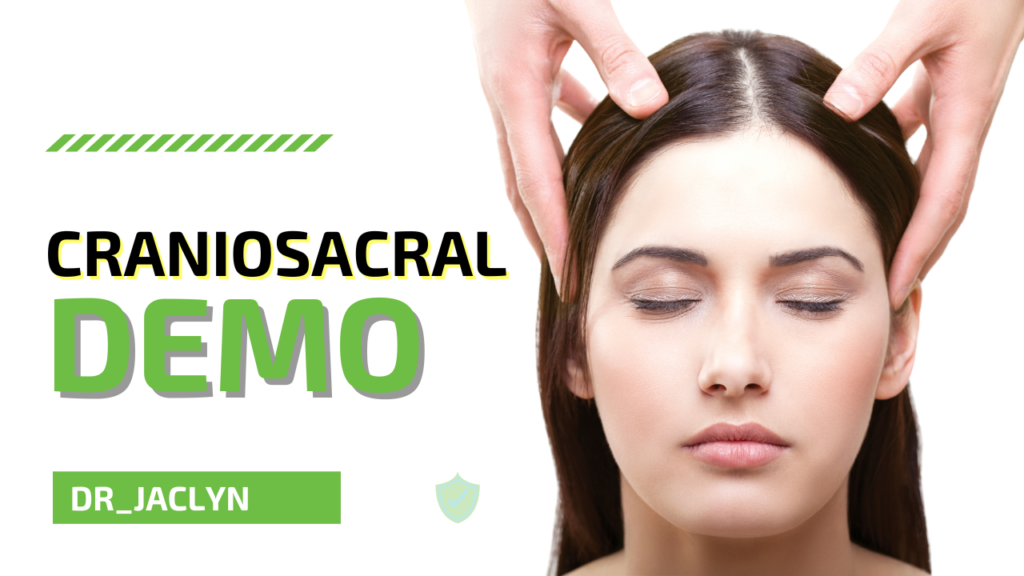
Okay. hi, Dr. Jaclyn here for Let’s Move Physical Therapy, and we’re doing a demonstration today of cranialsacral therapy, with miss Gina has done for us in the past. And we’re just doing it again for another friend here that has a lot of headaches. And so I’m gonna do this 10 step protocol, and it’s kind of like watching paint dry, not that exciting when you’re watching it on that end. You can definitely feel a lot of things, but this is just so people can get an idea of what to expect and the different hand placements for them. And so when we talk about cranial SAC therapy, I’m gonna just start while I’m talking. we’re talking about moving like cerebral spinal fluid up and down the spinal columns in the head. So what am I feeling for I’m feeling what you could equate to a heart kind of pulse or a breathing pulse and just where is the rhythm of this system at, and I’m feeling for different restrictions or openings in the system.
Dr. Jaclyn (01:17):
And that will tell me also, where are their fashion restrictions where are there more internal organ in some cases, restrictions. And it’s a very light touch about the weight of a nickel. So very, very light. And that’s what I’m feeling for. And I’m feeling for the restrictions within the cranial sacro system itself and within the fascia as well. Sometimes you can look at people and see how their clothes are pulling different weights. And you’ll know that, you know, maybe one side’s a little tighter than the other, and it’s kind of just looking for all those fine tuning things and seeing where that is going. So first I’m just starting. This is where I like to start is with the lower GI hold. And this is how I do the 10 step protocol. You’ll see some people do it a different way. If someone comes in with a different issue or ailment, you might jump to different parts of the protocol just depends on what they’re here for. And as always, everything depends on the person and their situation, what they can or cannot tolerate and what our physical therapy goals are. Right? And so this is another treatment tool that is in our toolbox. So it’s just one of the things that we can pull out to help. And I have found it to be very successful with headaches specifically. So here we go. Enjoy the show. let me know if you feel anything okay. If you feel any pain or if you’re uncomfortable or anything, your stomach’s pretty lit.
Assistant (02:59):
You feel it? Yeah.
Dr. Jaclyn (03:02):
And two, this is good to help bring about body awareness to the area that I’m touching as well. Some people feel nothing. Some people feel everything see colors, vibrating motions, some people, like I said, feel absolutely nothing at all. And so that’s what I’m just trying to tease out is where are her restrictions and how can I best help her move around in a pain-free but more equal type of way. Right? So that everything is moving, how it should be. You’re nervous.
Assistant (03:41):
Dr. Jaclyn (03:54):
So also too, something else that I’m noticing, not necessarily related specifically to the CRA her S SI is barely tight as well. So that’s her SAC IC joint.
Assistant (04:14):
There you go, go
Dr. Jaclyn (04:17):
All move right on this
Assistant (04:20):
Hover.
Dr. Jaclyn (04:22):
I’ll be outta here. This
Assistant (04:24):
Goes,
Dr. Jaclyn (04:33):
And again, it doesn’t look like I’m doing very much, cuz all the motions are very minute, very like touch. Also you’ll see like touch like this with lymphedema management as well, not an aggressive type of hand motion either. The protocols for lymphedema is not at all what I’m doing right now. Just to be clear on that. But as far as the touch, it’s emphasis more on a light touch than a really hard grabby touch. So you might see that as well. So when I’m touching up here, she’s really, really tight, not really wanting to flow, remove any direction into flex her extension. When I’m putting my hand on somebody, it really should kind of sink into them like a marshmallow or like a really nice soft feel. And this right now is just hard, is a rock. And so I’m gonna stay here longer. Okay. Next, the last thing next elastic inlet here, this one and it is not the same. So if you can feel it’s like,
Assistant (09:24):
Boom,
Dr. Jaclyn (09:26):
Be equal on either side. So wait. And so stomach gurgling is totally normal. Crying happens a lot. As people release stuff, laughing, burping, everything. It’s fine. Just let it go. All different releases. So next the highlight, there’s a couple different ways to do that. You can do it this way, which can sometimes be invasive and people like it. Or let me have you move down the hair. So I don’t go on your hair. here coming over top. This way seems to be a little preferred, this kind of handling here. And to me, this feels really restricted, especially on the right. A lot of times this one will be really restricted, especially on kids that use G tubes and don’t necessarily swallow or have the ability to swallow all the time. So you like to address that with children as well, or I know a TMJ issues. I will use this technique as well, in addition to other manual techniques.
Dr. Jaclyn (11:52):
And sometimes you’ll, I combined cranial in manual and mild fascial release, like the scraping techniques and stuff, they kind of will start to blend together just depending on what the person needs. I’ll just pick a tool out, kind of use it if it’s not getting what I needed to get, move on to a different tool till we’re successful. Yeah. Some people prefer more of the cranial techniques to more aggressive manual or myo, fascist scraping techniques, especially with headaches that I found this to be the most successful because it’s just too much at that time when they get closer to graduation or discharge, usually they can do some other releasing techniques, not so much the cranial, but definitely in the beginning when people are really lit and in a lot of pain, this is my more of my go to and next we do the ear pull. So sometimes if the ear pull is too much, especially for kids, I’ll take the hands to the outside like this. But I found that the ear pull feels pretty, pretty good, at least for the adult population. Sometimes when I do this one, I’ll get the most heat release felt or tingling in my fingers with this release.
Dr. Jaclyn (13:39):
Especially if the person’s headache is really in the front of their head and sometimes you’ll see us too. I might jump from this one to another hold and then come back. If I’m having a really hard time releasing the restrictions, I’ll go somewhere else and then come back. You will also see this also performed a lot in babies that have to, to Callis to help with the plates of the skull as well. Not too good. And then too, I’ll throw in a TMJ more of a manual therapy technique as well, especially obviously they’re having jaw pain. If that’s why they’re coming.
Dr. Jaclyn (15:06):
This is probably my like personal note, most favorite hold right here for the frontal lift. This is where I can usually pick up the most of what things are moving or not moving. And two, I’ll try to look down the person too and see is, you know, one hip higher, one leg longer, anything like that, one shoulder higher, lower are they moving around a lot? Do they need to release their pillows? Mm-Hmm are their arms uncomfortable? Do they keep moving their shoulders? Since all these things we’re looking at as we’re doing this as well. And it’s a constant ed flow with what I’m feeling, but then also with what I’m looking at to help the person as well.
Dr. Jaclyn (17:46):
So this next one is called the D pole. I kind of combine it with ACI trigger point release as well. Cause I have found that to be super helpful. And there’s a different way we could do where you hold, like your thumbs like that. It kind of is a drop off. I have found that one not to be as enjoyable by people. So I do it a little bit differently where it’s more of a distraction trigger point D pull combo. And again, if that doesn’t work for you, I’ve got, like I said, a bunch of other ideas in the bag that I can do. And that’s, what’s really nice about all the cranial stuff or manual therapy or even myofascial release work is one thing that doesn’t work for another person. We can easily change it up and modify it. So it works for somebody else.
Dr. Jaclyn (18:37):
And again, the protocol’s just a rough thing that we follow and we do have people that come in every month or every week just to have this done as a part of their self care routine, as it helps to just really reset yourself. And then you can move on and address any pains or aches that you’re having at that time with us so that we can resolve it for you so that you can go on to doing everything pain free, which is the ultimate goal of whenever you leave here, whether it’s that day or if it’s ending an entire episode of care. And with her, I’m literally feeling a lot of heat release on the right to the point that it’s very hot on my fingertips. So I definitely found the point, a nice trigger point there, this Oxys.
Dr. Jaclyn (19:33):
And what’s also nice about praying now is she came in saying she has headaches, but you know, sometimes I might be like, you know what, this leg, your left leg over here. I don’t know why she’s calling to me. So let me work on that a little bit. And sometimes that will, you know, help the headache or a different body part. So sometimes if we’re working somewhere else, it’s not. Cause we don’t hear you. It’s that it’s all connected. Your body is a chain. And sometimes the lower part of the chain really affects the upper part of the chain. Right. And so we wanna address the entire thing. And ultimately we wanna work with you working with your doctor to find out what is the origination or cause of the headaches so we can eliminate it altogether.
Assistant (21:22):
Does that feel okay?
Dr. Jaclyn (21:26):
Have you seen colors?
Assistant (21:29):
No. Okay.
Dr. Jaclyn (21:30):
Can you feel it throbbing your
Assistant (21:31):
Back a little bit? Yeah. Oh, okay.
Dr. Jaclyn (21:34):
So to her it feels a little bit to me it feels a time
Assistant (21:45):
Your neck is super tight. Your ear. I hear .
Dr. Jaclyn (21:51):
This is not a part of cranial. I just try to do a little distraction here. Cause the back of her neck is just so tight. So I like to end, I do try to, there’s a couple other holds we can do too, but I got a really, really big release there and I really liked how that felt. So that’s a good ending point for me. Sometimes we go way over. Sometimes we go way under, it just depends on what the person needs that day. But I like to kind of bring it back to more of a central feeling so that it’s not just ending on the head. And then just to demo one of the other holes that not gonna get into too much. Cause this is a really good release from you is under the sacrum and under here. And then another one that we do is we’re both knees are up and we have one hand under the bone ski and we’re pulling down to help with the sacrum as well. Just lay there for a second though. So when you’re done, like everyone to just lay there until their body feels like it’s ready to move. Cause I just reset everything.